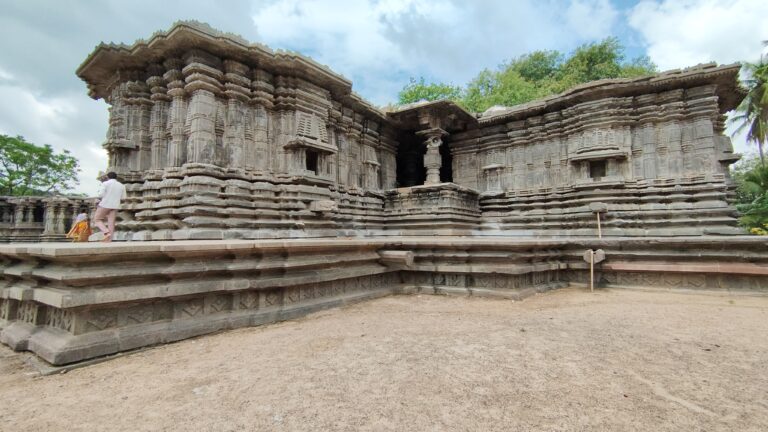
Hampi Travel Guide: A Journey Through History, Mythology, and Magnificent Ruins
Hampi is one of India’s most fascinating heritage destinations and a UNESCO World Heritage Site. Once the glorious capital of the Vijayanagara Empire, it was a thriving center of power, trade, and culture. What makes Hampi truly special, however, is that its history goes far beyond medieval times—its roots trace back to the Ramayana era.
Hampi is believed to be the birthplace of Lord Hanuman, and the region is dotted with several ancient sites associated with the epic. Exploring Hampi feels like walking through layers of time, where mythology and history blend seamlessly.
To cover the major attractions, you’ll need at least 3 days. However, if you want to explore the ruins in detail and truly understand the historical significance, 4–5 days is highly recommended.
Where Is Hampi Located?
Hampi is situated in Hosapete Taluk, Ballari (Bellary) District, Karnataka, India. It is well connected by road and rail to major cities such as Bengaluru, Hyderabad, and Mumbai.
- Distance from Hosapete: 12 km
- Stay options: Hosapete or Kamalapura (Vijayanagara), the present-day name for the Hampi area
op Places to Visit in Hampi
1. Virupaksha Temple
The Virupaksha Temple is one of the oldest functioning temples in India, dating back to the 7th century. Dedicated to Lord Shiva and Goddess Pampadevi, parts of the temple existed even before the Vijayanagara Empire.
Located at the end of the lively Virupaksha (Hampi) Bazaar, this temple stands as the spiritual heart of Hampi. The bazaar itself stretches over a kilometer and is considered one of India’s earliest organized marketplaces.
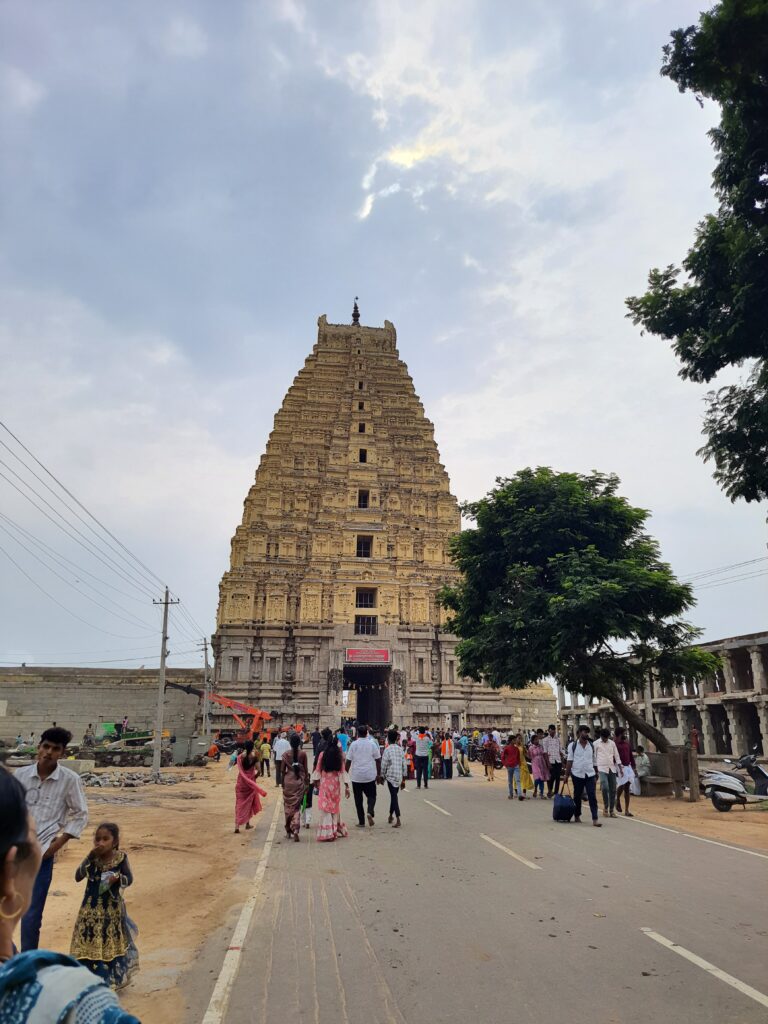
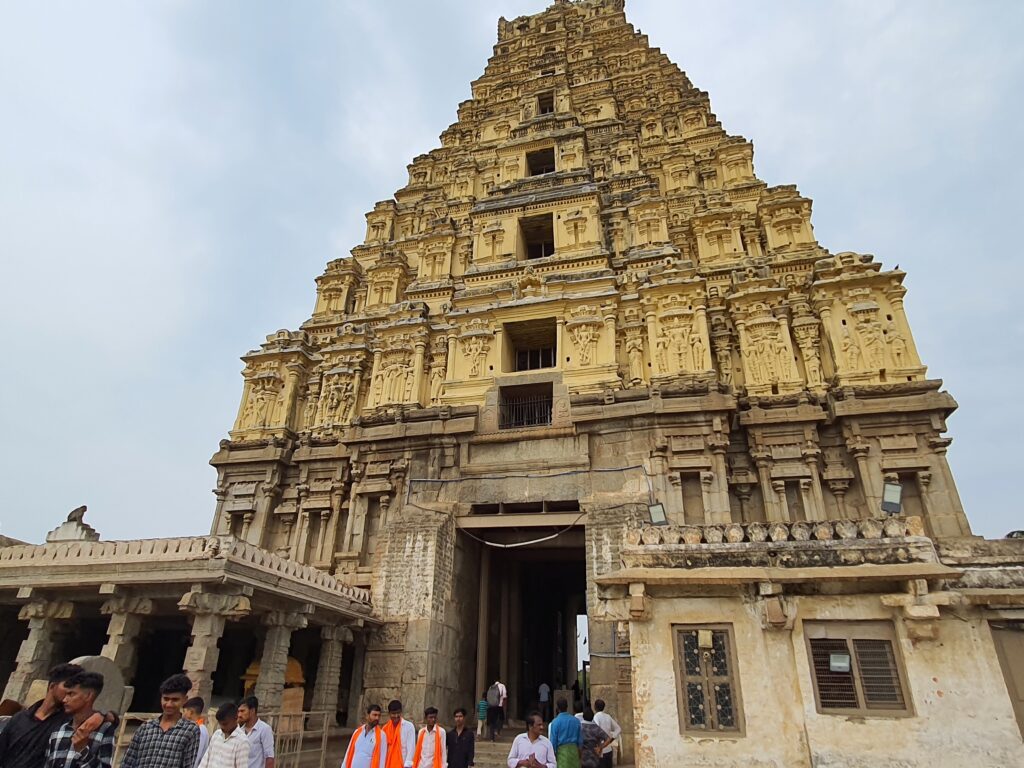
📌 Don’t miss meeting Elephant Lakshmi, who blesses visitors at the temple.
2. Hampi Bazaar
The Hampi Bazaar was once a bustling trading hub during the Vijayanagara period. Today, it offers a glimpse into the city’s past while serving as a great place to walk, shop for souvenirs, and enjoy local food.
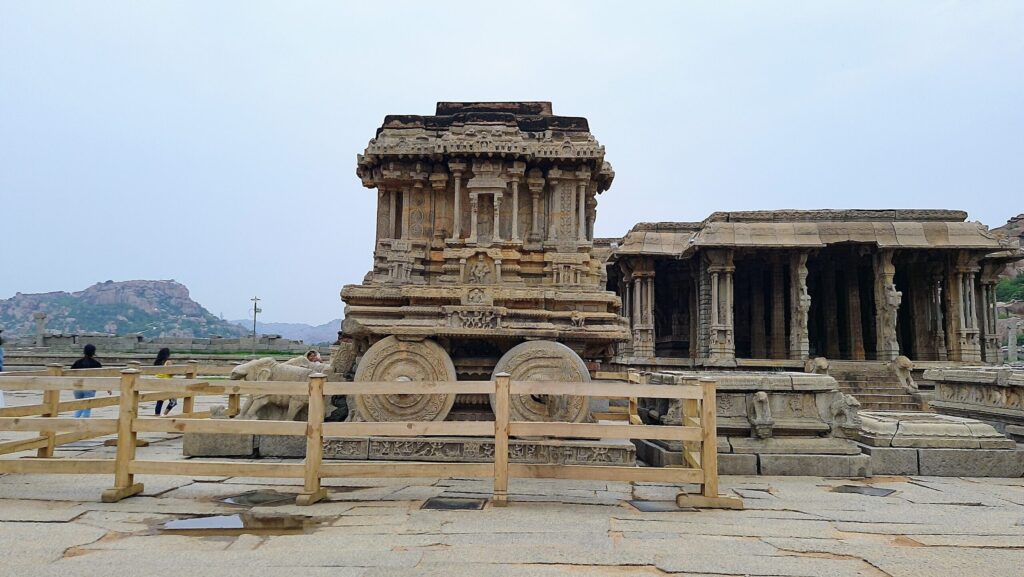
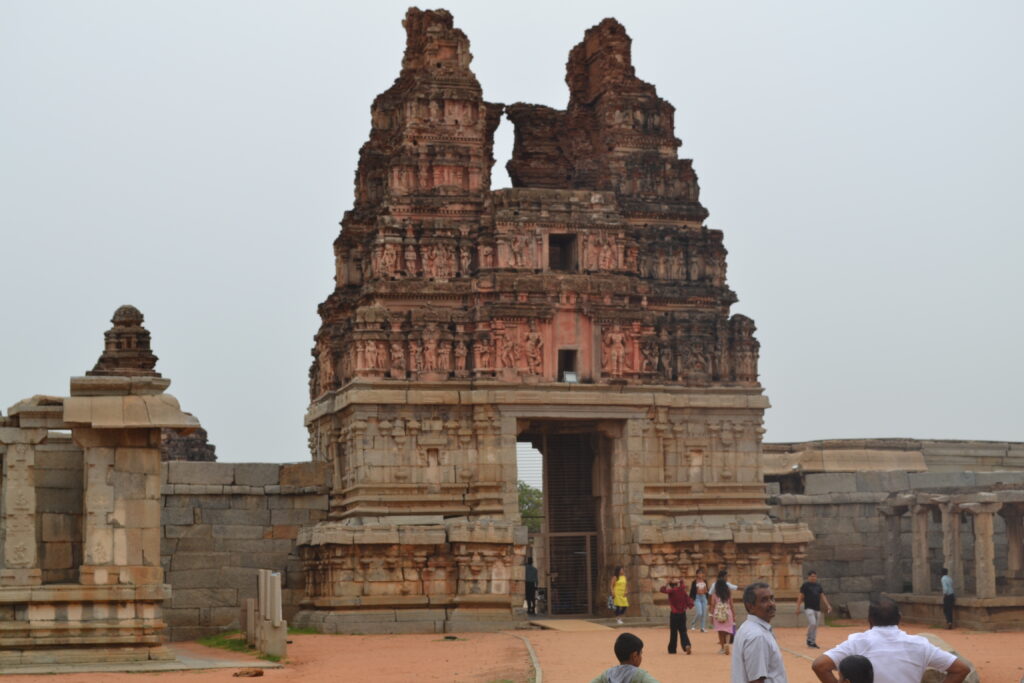
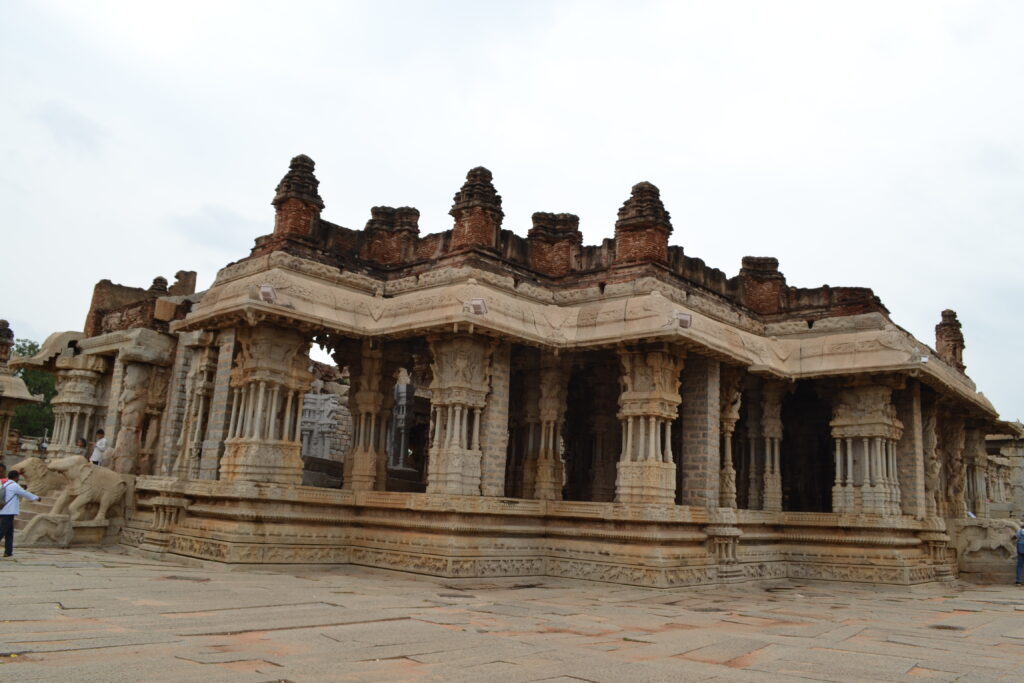
3. Shri Vijaya Vitthala Temple
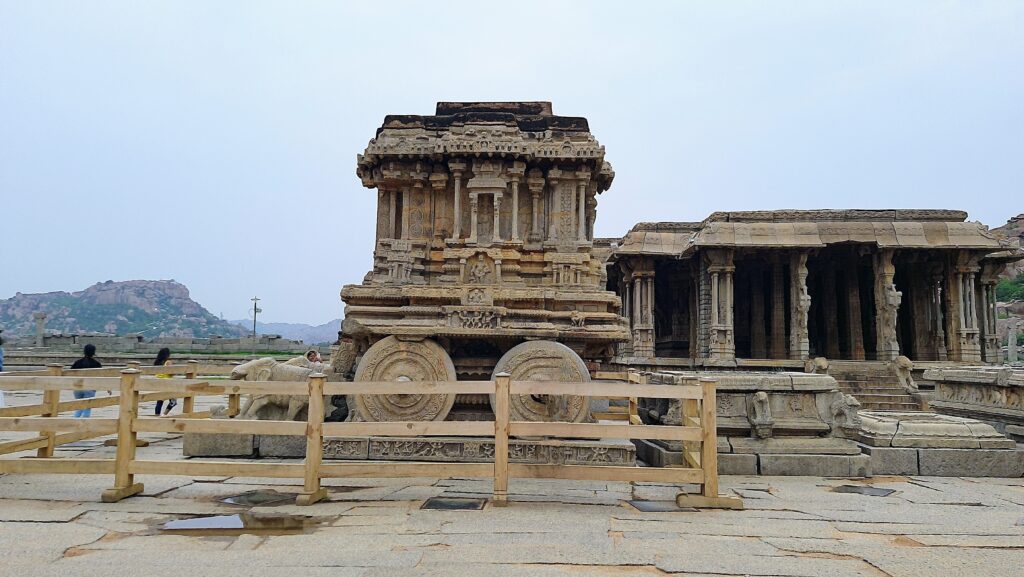
Built in the 15th century, the Vijaya Vitthala Temple is a masterpiece of Vijayanagara architecture. Dedicated to Lord Vitthala (an incarnation of Lord Vishnu), this massive complex is famous for:
- 🎶 Musical Pillars
- 🚩 The iconic Stone Chariot, featured on India’s ₹50 currency note
The Stone Chariot is carved from hard granite and reflects architectural inspiration from the Sun Temple at Konark, Odisha.
Ruins of the Vijayanagara Empire
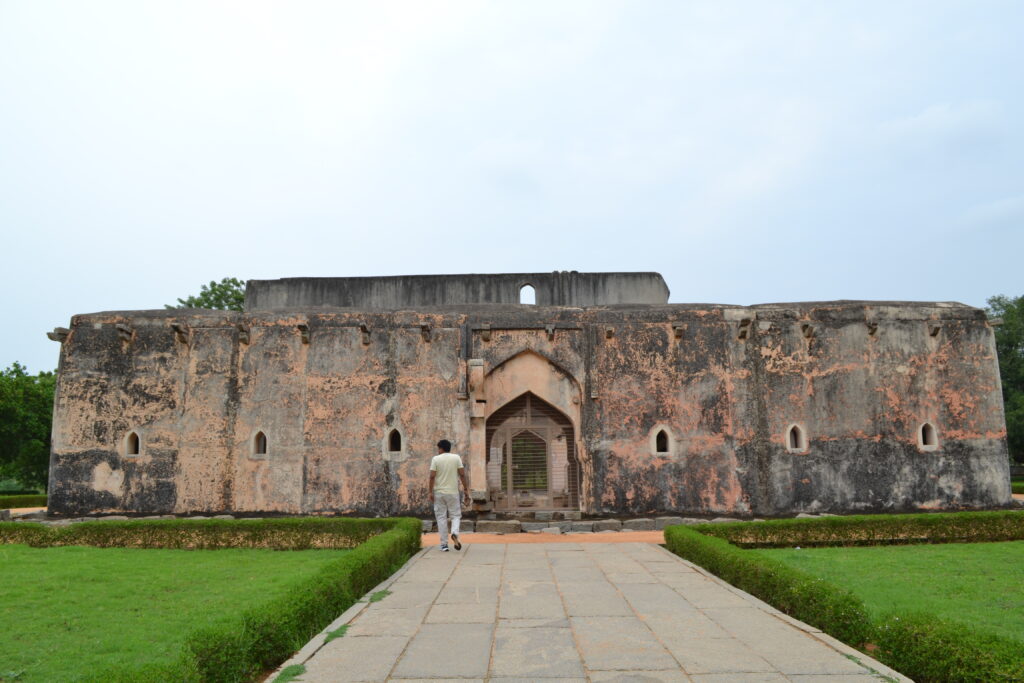
Queen’s Bath
An elegant structure believed to have been used by royal women, showcasing Indo-Islamic architectural elements.
Royal Enclosure & Other Ruins
Within the ruins, you’ll find:
- Mahanavami Dibba – A massive stone platform built by Krishna Devaraya to celebrate victories, especially over Odisha
- Single Stone Carvings believed to be part of the main palace entrance
- Kalyani Pushkarni and several other royal remains
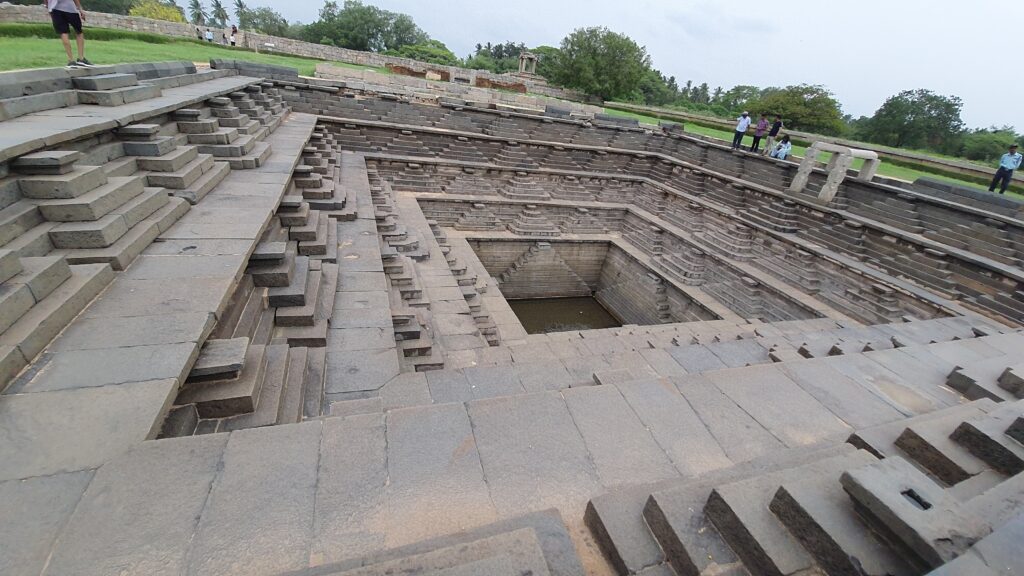
Hazara Rama Temple
Famous for its detailed carvings depicting scenes from the Ramayana, this temple was used by the royal family for private worship.
Underground Shiva Temple
A unique temple that remains partially submerged in water, adding to its mystical charm.
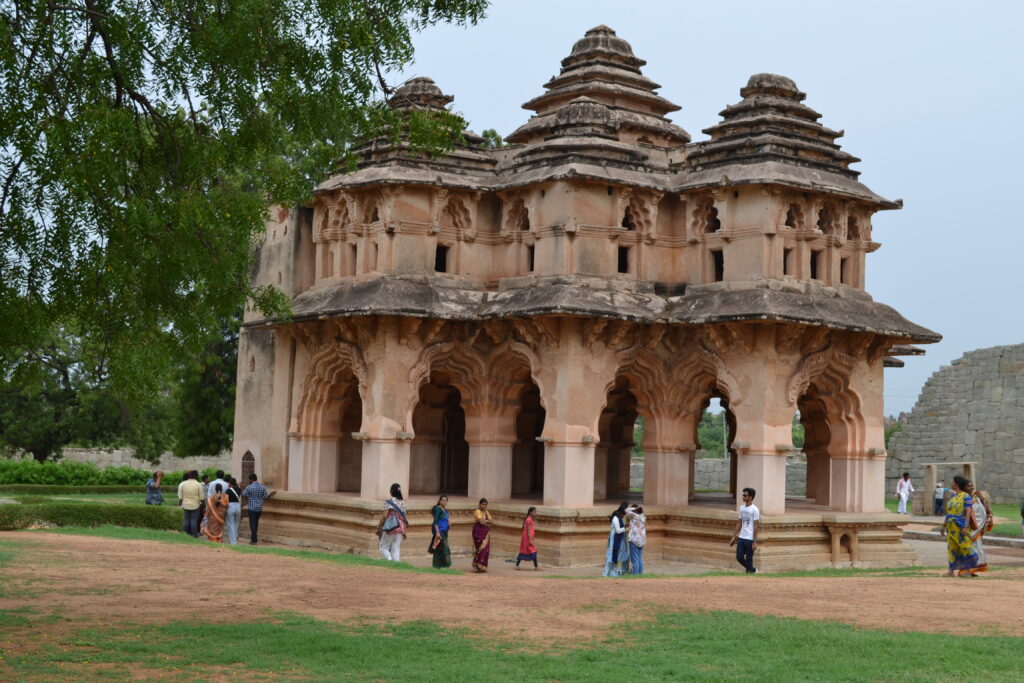
Lotus Mahal (Kamal Mahal)
An architectural marvel blending Hindu and Islamic styles, known for its elegant lotus-inspired design.
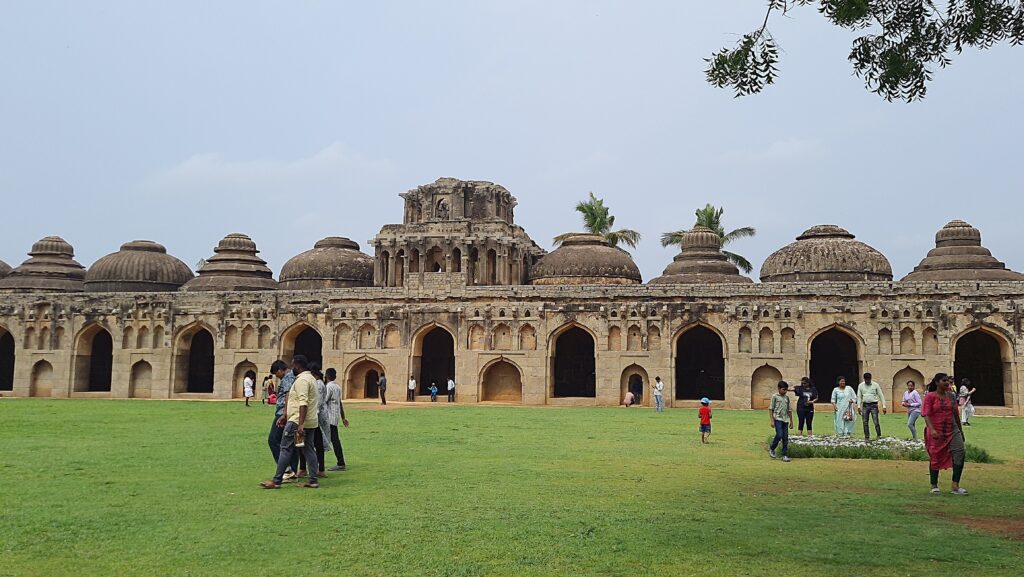
Elephant Stables & Museum
The Elephant Stables once housed royal elephants. Located nearby is the Hampi Museum, which provides deeper insights into the history and artifacts of the Vijayanagara Empire.
Shri Krishna Temple & Krishna Bazaar
Dedicated to Lord Krishna, this temple is located opposite the historic Krishna Bazaar, another important commercial area of ancient Hampi.
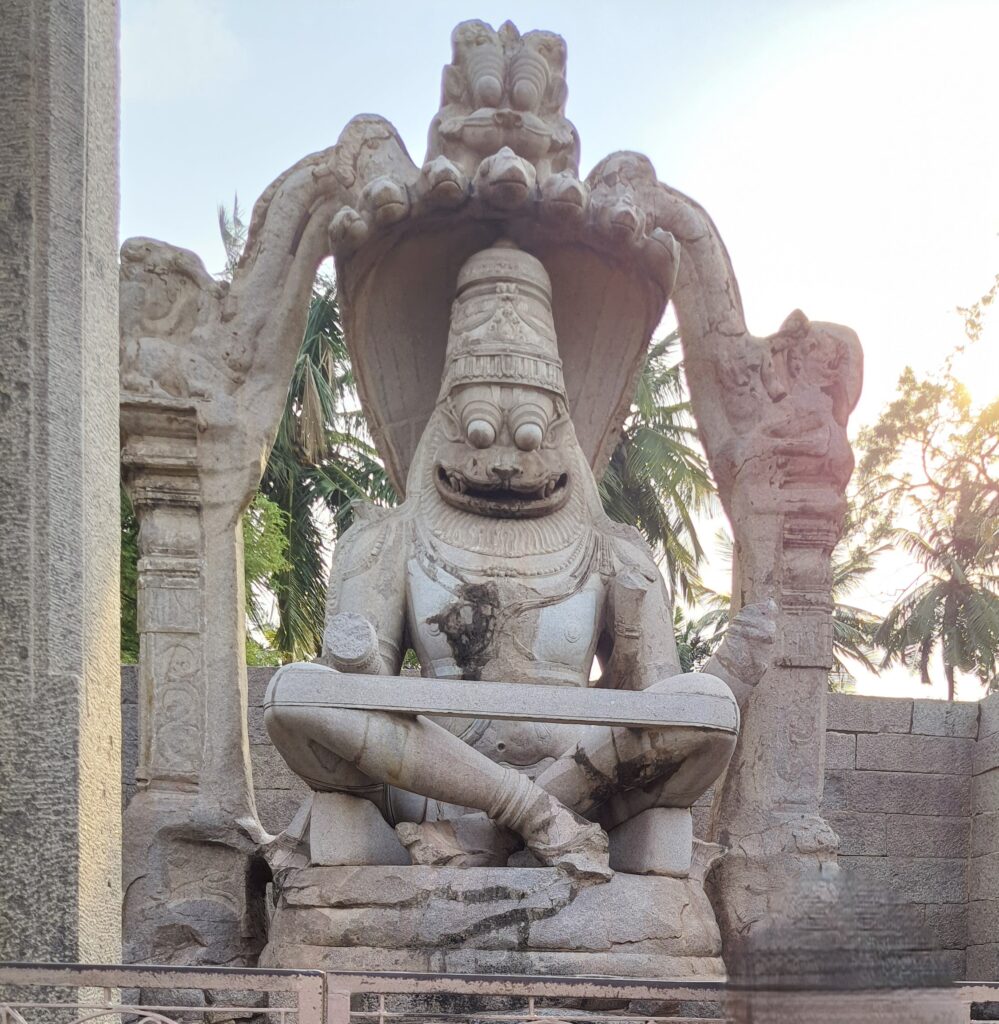
Kadalekalu Ganesha
A massive 12-foot-tall Ganesha statue, located north of the Krishna Temple. It is one of the largest Ganesha idols in Hampi.
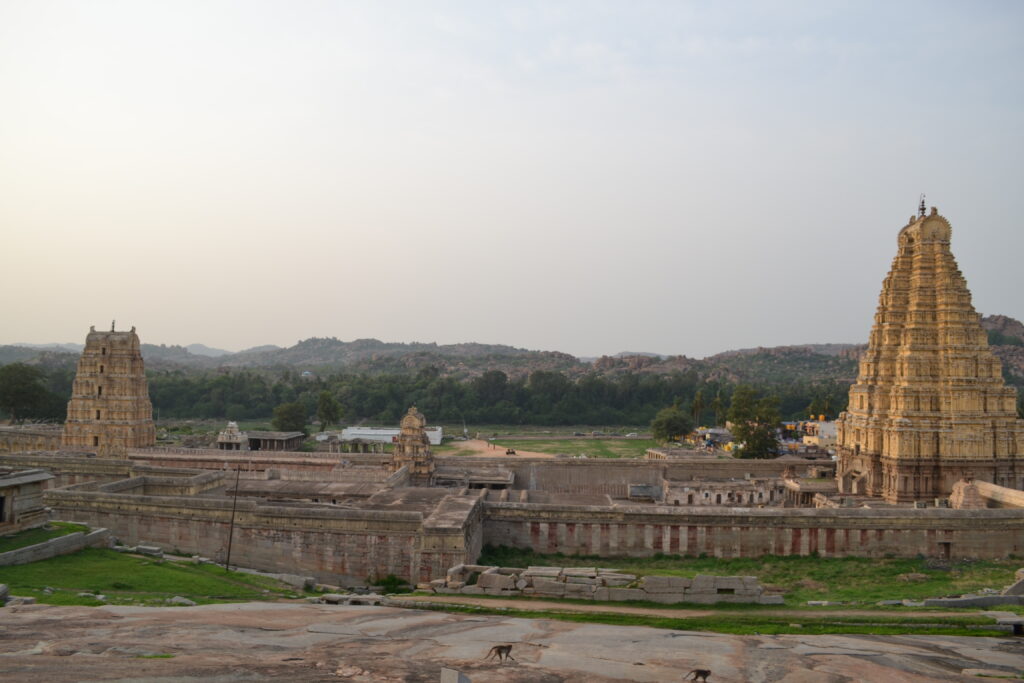
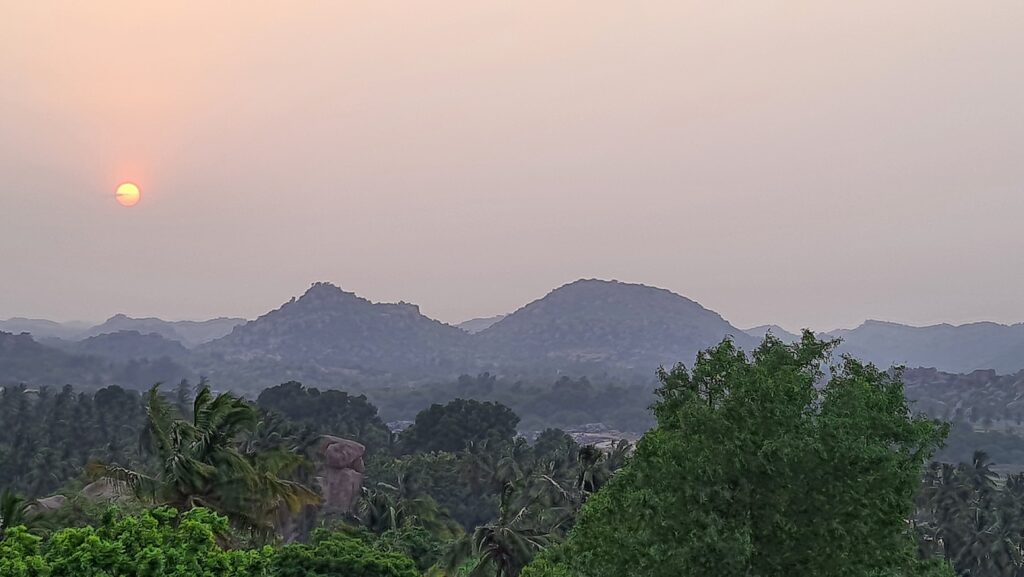
Hemakuta Hill & Sunset Viewpoint
The Hemakuta Hill Temple Complex offers:
- Ancient temple ruins
- Panoramic views of Hampi
- A stunning view of Virupaksha Temple
- One of the best sunset viewpoints in Hampi
This is a perfect spot to relax and enjoy the golden hues of sunset.
Tungabhadra River
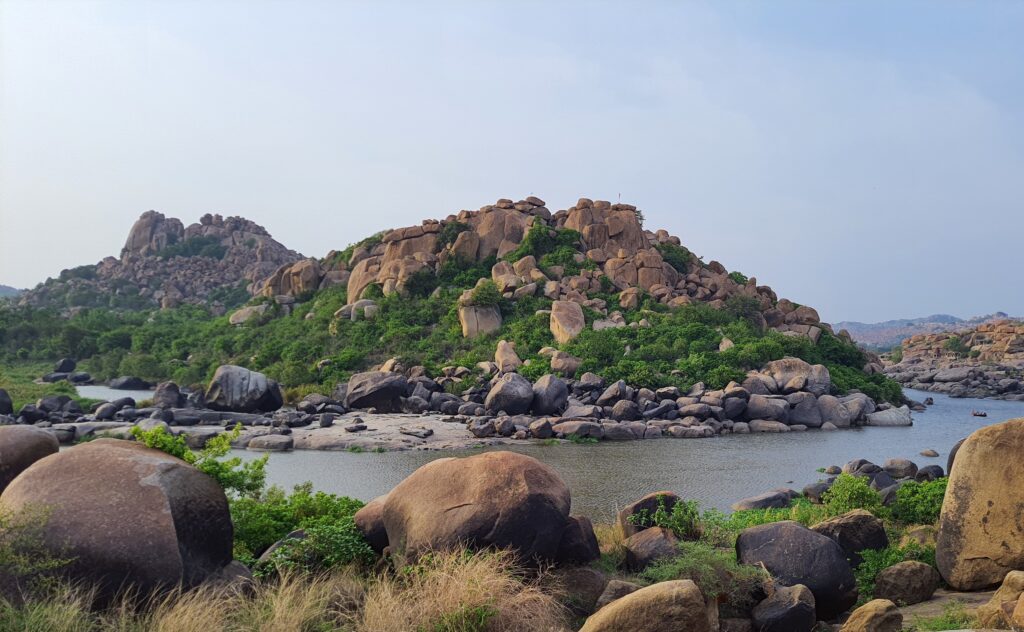
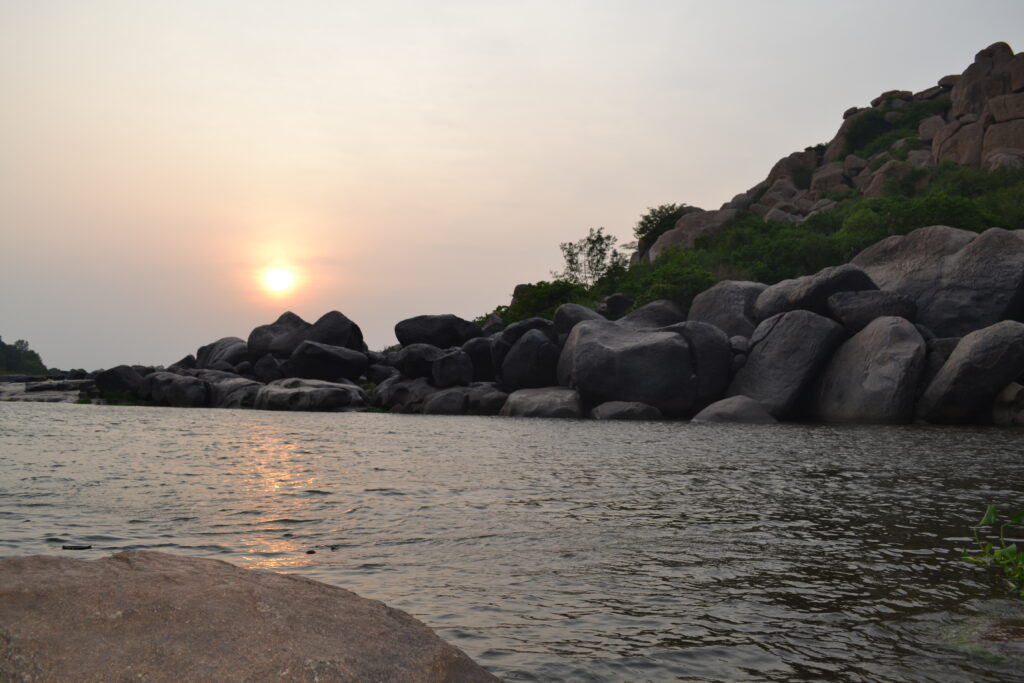
Spend some peaceful time along the Tungabhadra River, especially during sunset. It’s ideal for relaxation and photography.
Exploring Anegundi (Across the River)
Anegundi Fort & Durga Temple
Anegundi is believed to be older than Hampi and holds immense mythological significance.
Pampa Sarovar
A sacred water body associated with Lord Rama and Lord Hanuman.
Anjanadri Hill – Birthplace of Lord Hanuman
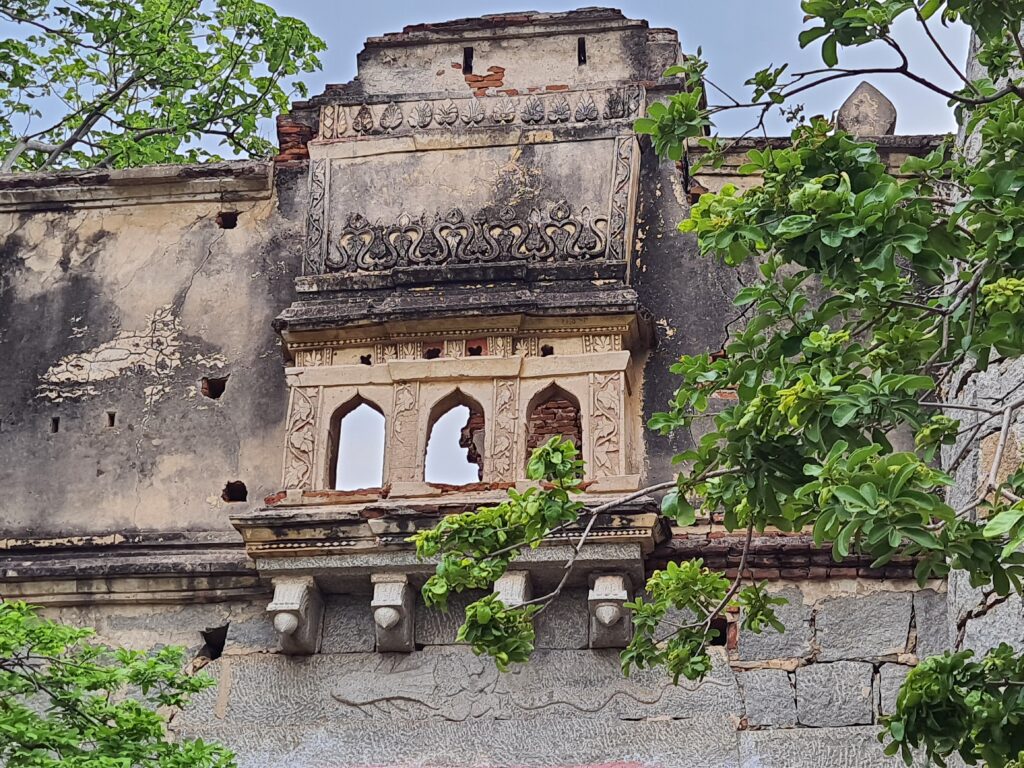
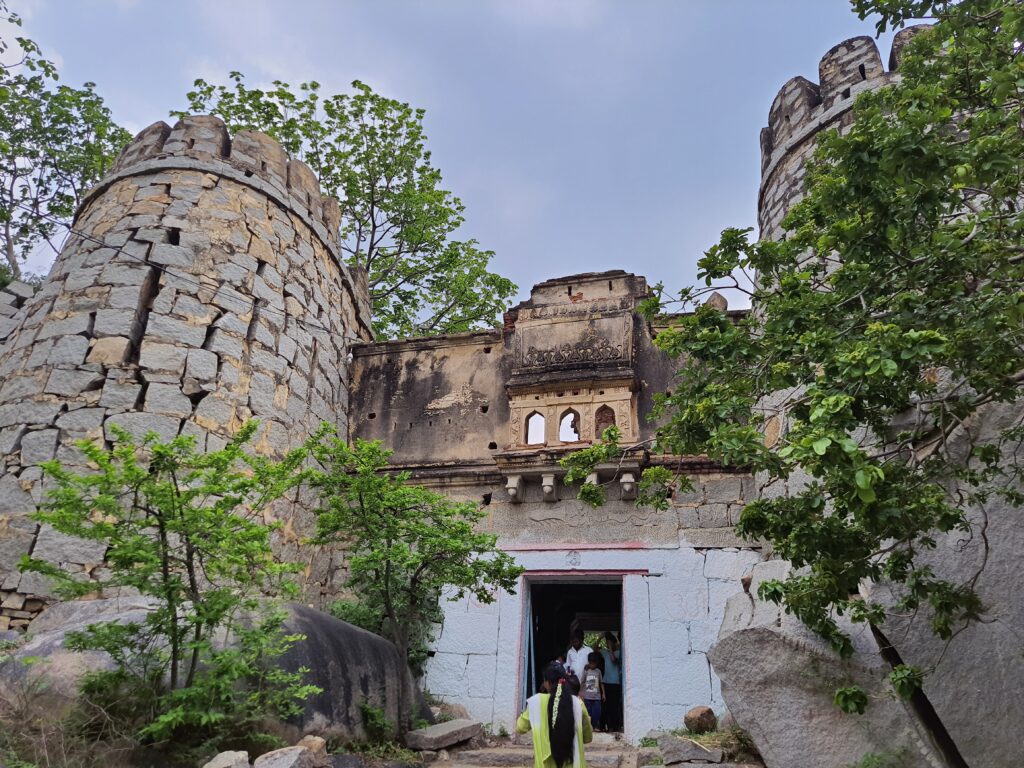
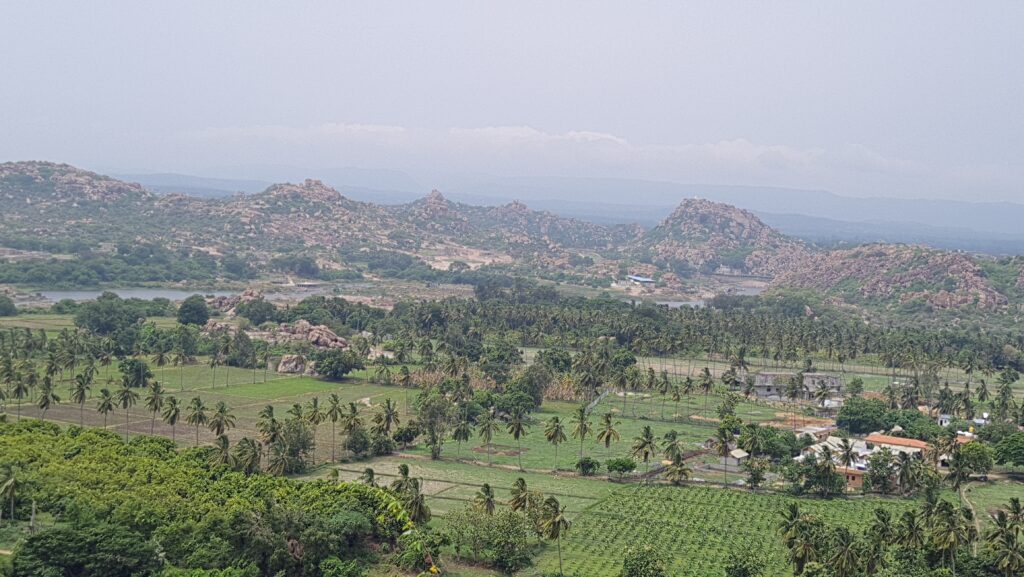
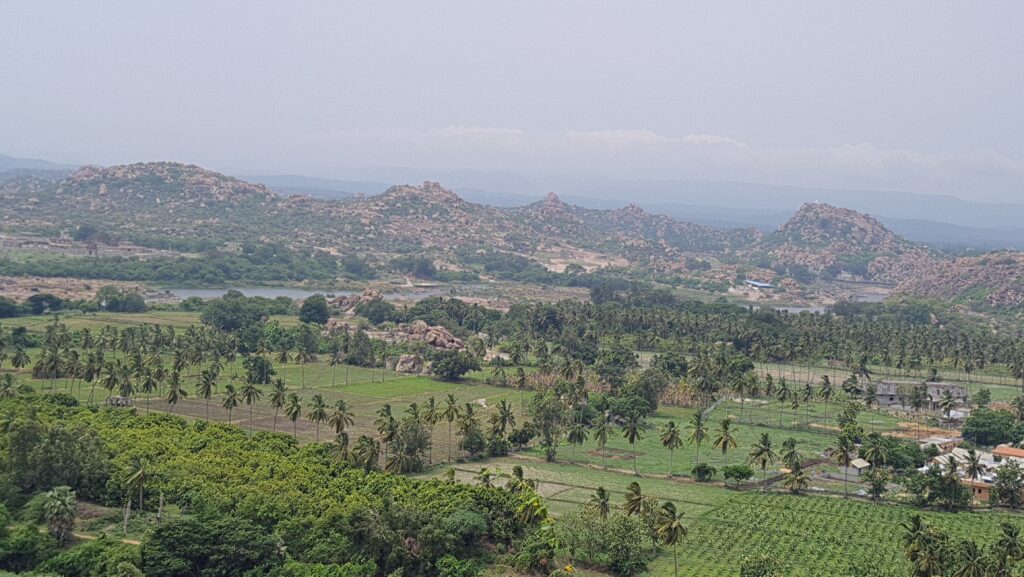
The Anjanadri Hill is considered the birthplace of Lord Hanuman. To reach the hilltop temple, you’ll need to climb 575 steps.
🛕 The climb is totally worth it—not just for the temple but also for the breathtaking views from the top.
Final Travel Tip
There are many more places in Hampi that cannot be covered in a single trip. It’s highly recommended to:
- Buy a local guide map
- Plan your itinerary based on available time
⏱ Minimum time required: 3 days
⏳ For in-depth exploration: 5 days
Hampi is not just a destination—it’s an experience that connects you to India’s glorious past, rich mythology, and timeless architecture.